eGauge config with solar + storage

When configuring energy storage (battery) with the eGauge, there’s a few things to know:

  1. From the eGauge configuration guide: “Typically, renewable energy systems should read positive when there is active generation, and battery systems should read positive while charging and negative while discharging.”
  2. I have J&D CTs on my batteries with the arrow on the Current Transformer pointing away from the batteries. The arrow orientation varies by CT maker so look it up. Or use Channel Checker and verify that the Battery registers are reading positive while charging and negative while discharging.
  3. Unlike solar, the battery loads are NOT balanced. You must use a clamp on each leg of the split-phase feed.
  4. The formula for each battery Register is: P = S{NN} x L1 and P = S{NN} x L2
  5. For the Battery Virtual Register, use: Battery = – Batteries L1 – Batteries L2

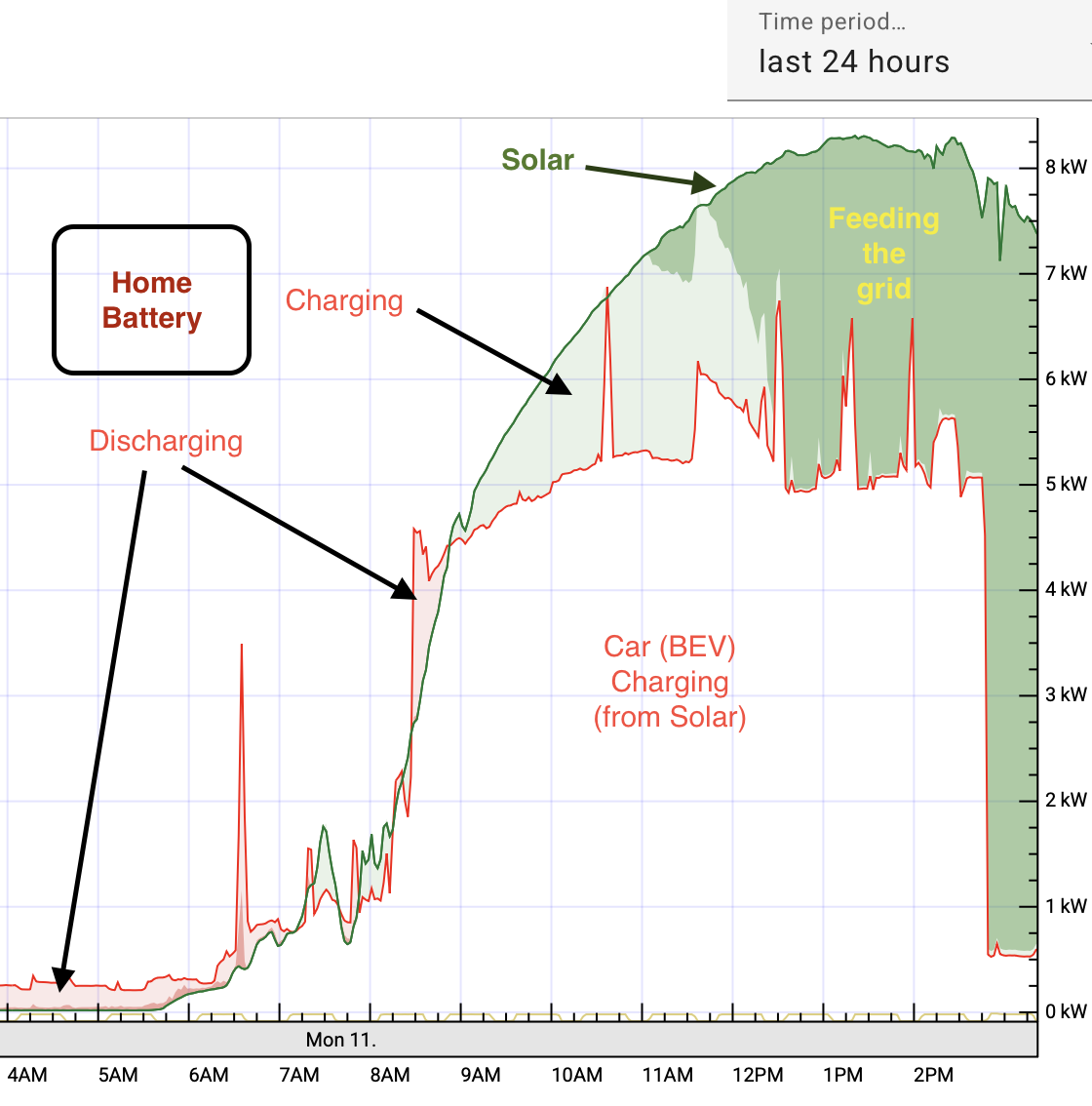
Then you’ll get a nice graph that looks something like this:
Background: My solar installer included an eGuage 3010 energy meter when they installed my first array in 2016. It was a solid piece of kit but it got quite slow when I added more CTs. I replaced it with a 4115 that’s plenty quick and has 15 CT ports and they’re all in use. In fact, I had to unplug the fridge CT to make a space for the 2nd leg of the battery circuit. The only way I’ve seen to improve on an eGauge is the span electrical panels.
I helped finance this war

When W invaded Iraq in 2003, I realized that as long as I was buying gasoline for my car and natural gas for my stove and furnace, I was part of the problem. I started looking for the exit.

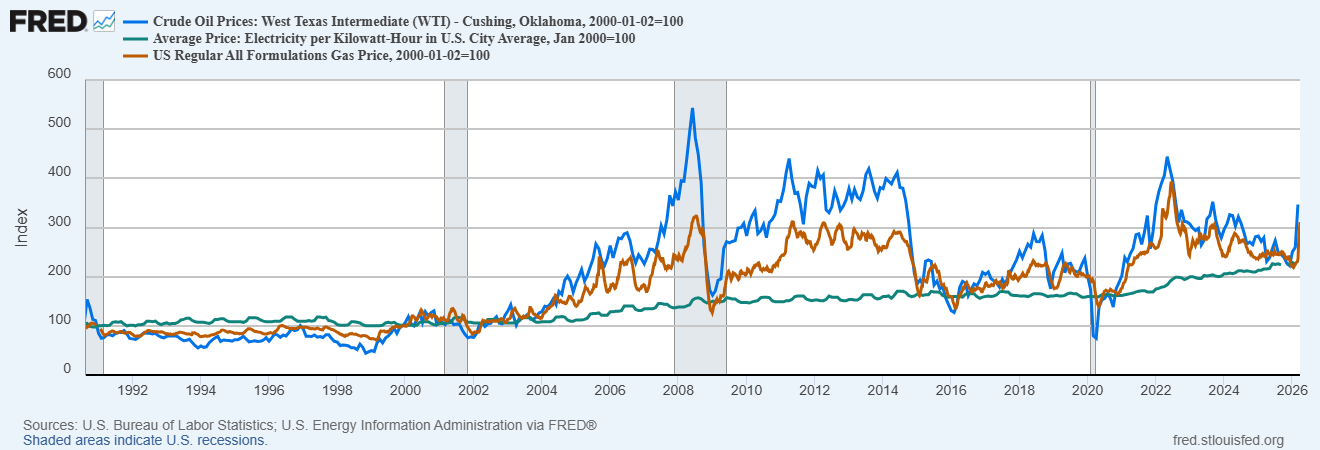
The following decades saw petroleum prices riding a roller coaster while electricity prices were nice and stable. The following chart shows the volatility difference between electricity (green) and gasoline (orange).

Electricity prices range from on par to considerably cheaper than gas. I dipped a toe into the electric car market with a Ford Fusion Hybrid. That experience led to leasing a 2013 Nissan Leaf. Besides being better cars, EV drivers pay $0.05/mile and gasoline drivers pay $0.12/mile. And that was before the current price spike. That hybrid was the last gas powered car I’ll ever own.

Ref: Maybe you should have bought an electric car

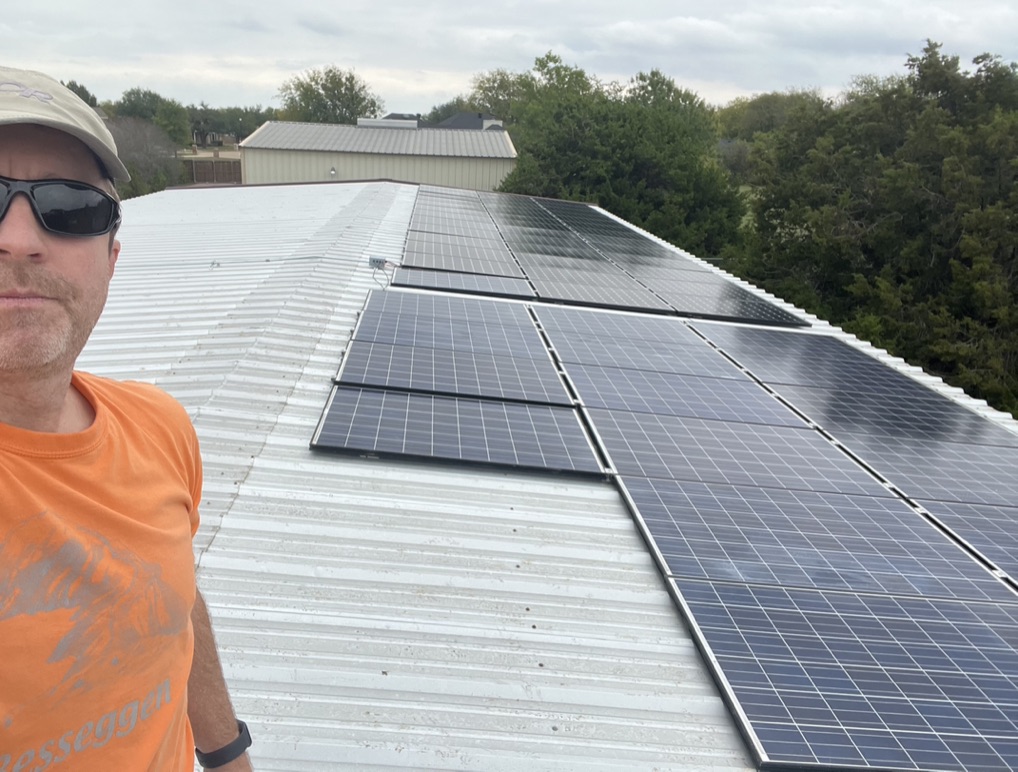
Ryan’s Solar Install

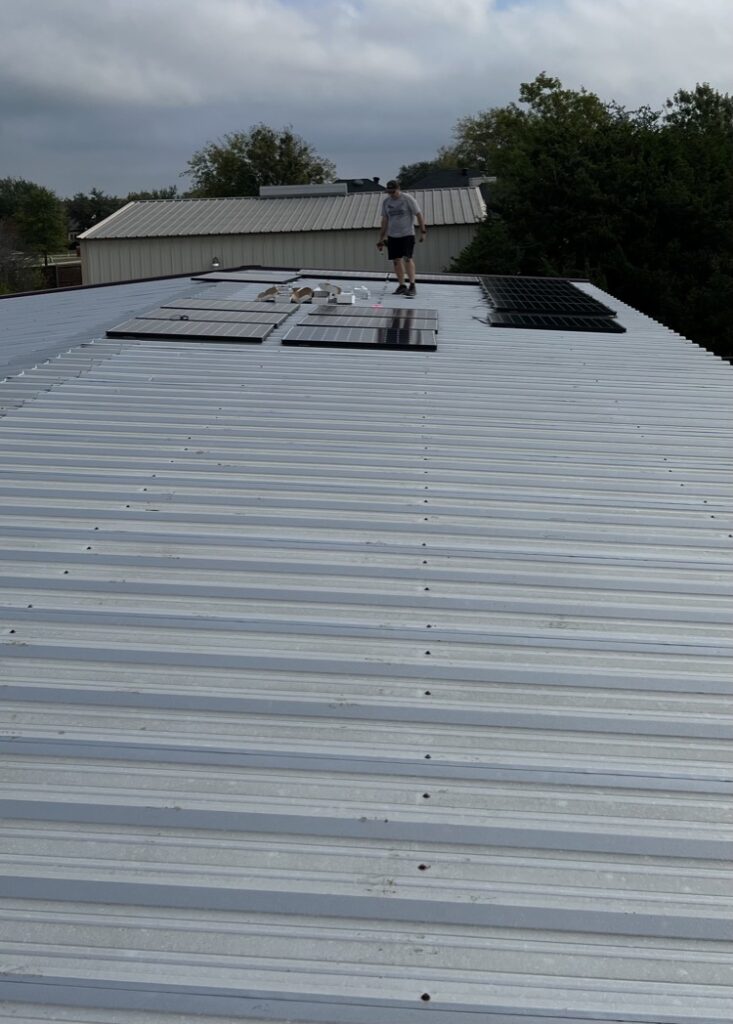
In early November I flew to Dallas and helped my buddy Ryan install a solar array. Since he had a large low-slope metal roof on his garage, we decided that was the right place to put them. Ryan’s dad also helped and in two days, the three of us had hoisted three large stacks of panels up onto the roof, bolted them down, and wired them all together.

Then we pulled the feed wires onto the roof, hooked up the three strings and then spent a bunch of time futzing with the inverters, replacing optimizers, and updating the locations of panels whose optimizers had invalid serial numbers on them (pro tip, check them all on the ground beforehand). Then we hooked up his eGauge meter so he can monitor total production and consumption.

On day 3, the inspector showed up, checked a few things, asked some questions, and then approved the final inspection. Since then, Ryan’s solar array had been making me jealous. Between the much higher solar factor in Dallas and having more panels, his winter production is ~10x mine.